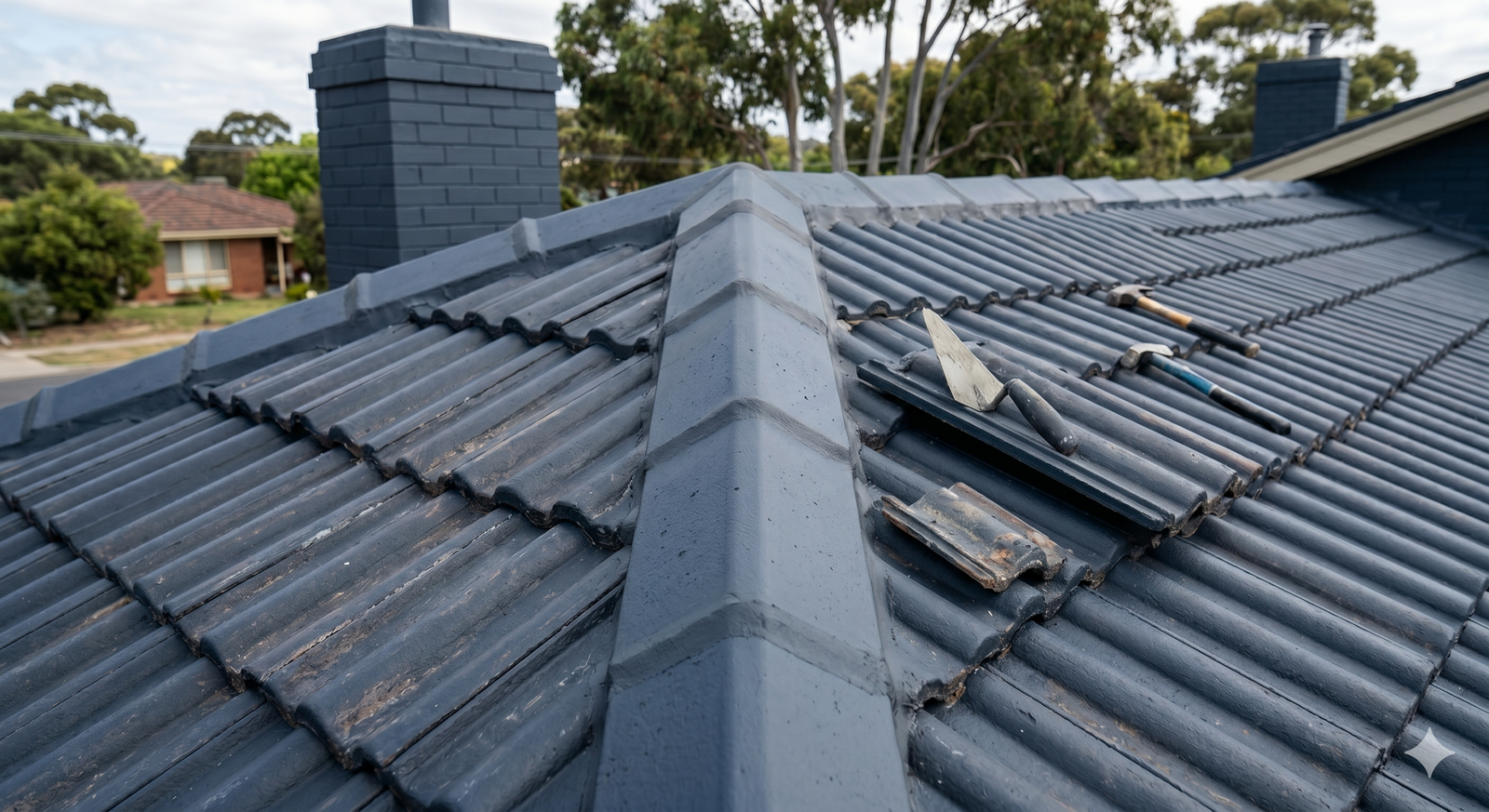
What ridge caps actually do
Ridge caps are the tiles that run along the peaks and hips of your roof. They're held in place on a bed of mortar, then sealed along the joints with pointing. Together, bedding and pointing keep the caps level, locked down and watertight — they're one of the most important defences on a tiled roof.
Why the mortar breaks down here
Mackay's intense summer heat makes a roof expand and contract every day. Traditional rigid cement bedding can't keep flexing with that movement forever. Over the years it cracks, crumbles and washes down into the gutters — you'll often see sandy grit and lumps of old mortar collecting there.
Once the bedding fails, the ridge caps loosen. That opens a direct path for water into the roof cavity, and it makes the caps far more likely to be lifted off in strong winds during storm season — which is both a leak risk and a safety hazard.
Quick tip — Finding crumbled mortar in your gutters, or seeing daylight or gaps along the ridge line, usually means the caps need attention before the next big storm.
Re-pointing vs re-bedding
These two repairs are often confused, so it helps to know the difference:
- Re-pointing applies fresh flexible pointing over the existing joints to reseal them
- Re-bedding is a bigger job — removing the caps, clearing out the old bedding, and laying the tiles on a fresh mortar bed
Modern repairs use a flexible polymer pointing rather than rigid cement. It moves with the roof instead of cracking, so the seal lasts much longer in our climate.
Why it shouldn't wait
Loose ridge caps don't fix themselves, and they tend to get worse fast once the seal is broken. Catching it at the re-pointing stage is far cheaper than waiting until water has been getting into the roof for a season.
Think this might be your roof? Get a free, no-obligation quote from a local Mackay tiled-roof repairer. Get in touch →