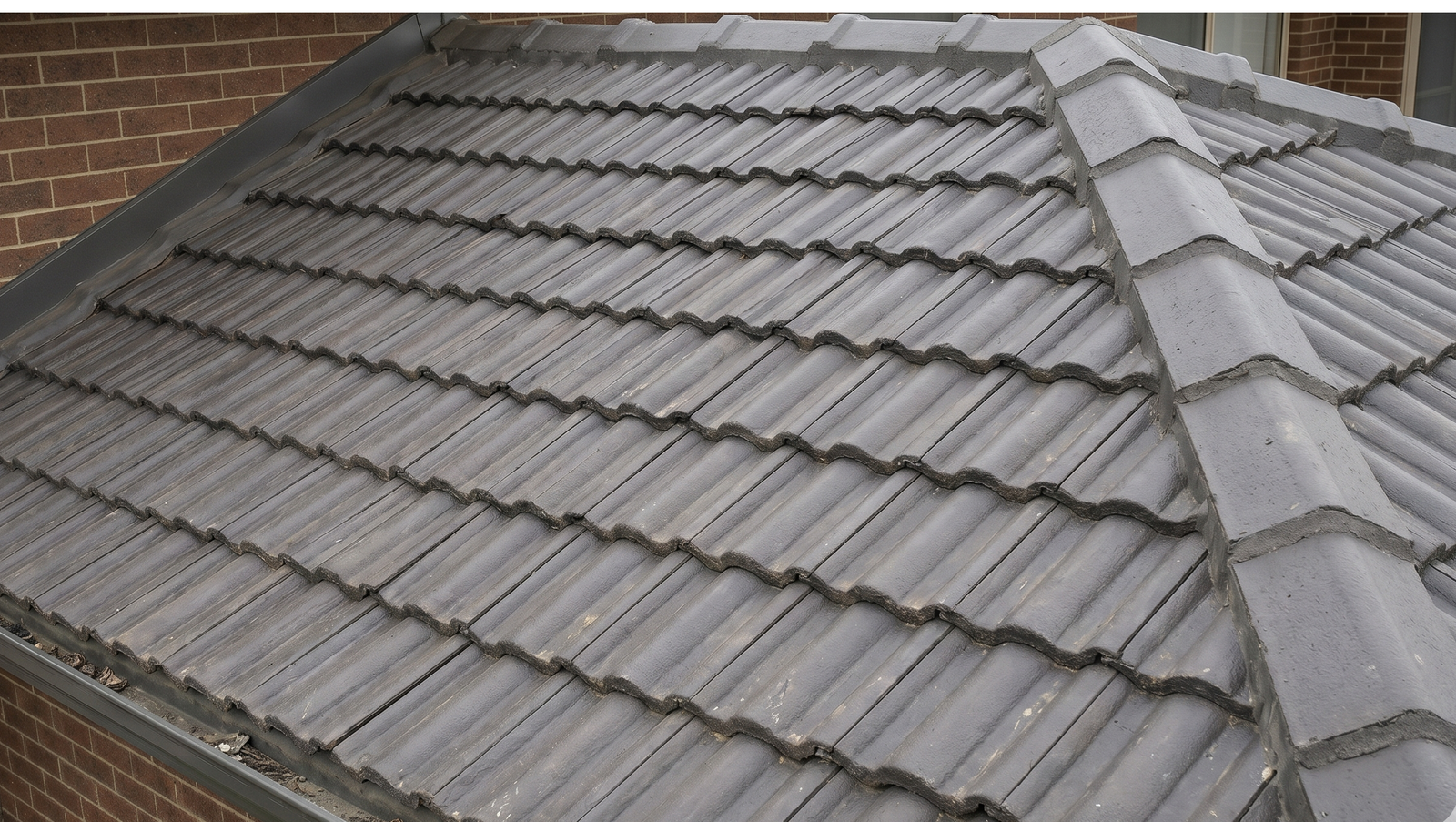
Small cracks, big problems
Not every damaging crack is obvious. Hairline fractures from falling branches, thermal stress or someone walking on the roof in the past often leave the tile sitting perfectly in place. From the ground, the roof looks fine.
During dry weather, those cracks cause no trouble at all. The problem only shows up when the rain sets in.
How porous tiles leak
Concrete tiles in particular can become porous as they age. In a long Mackay wet season, cracked and porous tiles soak up water like a sponge. Once they're saturated, water passes straight through into the ceiling cavity below.
There's a hidden cost too: saturated tiles get heavier, adding significant extra weight to the roof and putting more strain on older timber frames.
Quick tip — If your roof leaks only after several days of rain rather than during the first downpour, soaked porous tiles are a likely culprit — they need to fill up before they pass water through.
Signs worth checking
- Leaks that appear after prolonged rain rather than a single storm
- Tiles that look weathered, flaky or discoloured compared to their neighbours
- Moss, lichen or dark staining holding moisture against the tile surface
- A roof that hasn't been sealed or restored in many years
The fix
The right repair depends on how widespread it is. A few cracked tiles can simply be replaced. Where porosity is general across the roof, cleaning and re-sealing with a protective coating restores the surface and helps the tiles shed water instead of absorbing it.
Think this might be your roof? Get a free, no-obligation quote from a local Mackay tiled-roof repairer. Get in touch →